
Disclaimer: This blog is not intended to be clinical advice but is intended to be a discussion on the integration of Spiritual and Mental Health from a Catholic Perspective. All clinical questions or concerns should be directed to a licensed mental health professional in your state. We recommend that specific questions related to personal circumstances be addressed with a member of the clergy or a spiritual director informed by the teachings of the Church.
Lent is a wonderful opportunity to visit the Sacrament of Reconciliation! Confession, while spiritually necessary, arguably has benefits for your mental health if approached correctly! Maybe it’s been years since your last Confession and you’re not sure where to start. Maybe you’ve gone weekly for 10 years but never thought about what it can also do for your mental health.
The Sacrament of Reconciliation is a healing sacrament! It reintegrates the human person into relationship with Christ. The Lord has continually used our human need for relationship as a gateway to His love. When He gave us the Sacrament of Reconciliation, He gave us a Sacrament that embraces our need to be received. And He left us with representatives on earth for this purpose.

When we take a look at the effects of social interaction on the human brain, we get a glimpse into the reality that Christ considered the entirety of our human need when he left us the Sacraments. He knew we needed Divine and human connection – an encounter with the Incarnation to heal from sin. He chose to use our cognitive capacity in the Sacrament of Reconciliation to bring us healing.
Like all the sacraments, Penance is a liturgical action. the elements of the celebration are ordinarily these: a greeting and blessing from the priest, reading the word of God to illuminate the conscience and elicit contrition, and an exhortation to repentance; the confession, which acknowledges sins and makes them known to the priest; the imposition and acceptance of a penance; the priest’s absolution; a prayer of thanksgiving and praise and dismissal with the blessing of the priest.
Catechism of the Catholic Church, 1480
The Church and Conscience
When we go to Confession, we are bringing to the Lord (through a priest – a physical representation of Christ on Earth) actions we took (or didn’t take) that violated Divine Law, as revealed through the teachings of the Church. If our conscience is well formed, we are also bringing the times we violated our conscience to the confessional. And if you haven’t read the Catechism, the Church has a lot to say about conscience!
Conscience is a judgment of reason whereby the human person recognizes the moral quality of a concrete act that he is going to perform, is in the process of performing, or has already completed. In all he says and does, man is obliged to follow faithfully what he knows to be just and right. It is by the judgment of his conscience that man perceives and recognizes the prescriptions of the divine law”
CCC, 1778
The Church teaches that our conscience, while informed by the teachings of the Church, should guide our actions. We are obliged to actively cultivate it to align with Divine Law and to follow our conscience. If we act, for whatever reason, against Divine law and what we know to be right, we are sinning. And the effects of sin result in disintegration of our spirit, mind, and body. Our consciences are subject to err. We must actively work to inform them with Divine Law.
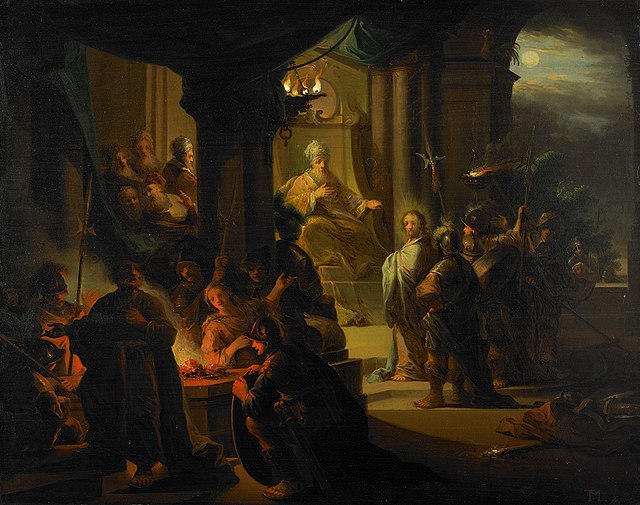
Oftentimes in our lives, we are tempted to act in a way that violates what we morally believe. Parts of us know and desire to stay in right relationship with the Lord, while other parts of us stray. The presence of two conflicting beliefs and or desires can be painful and disturb our peace. In our efforts to justify our contradictory beliefs or actions, we simply elevate our anxiety.
Cognitive Dissonance and Confession
Cognitive dissonance is a psychological phenomenon in which someone holds two contradicting beliefs or acts against what he or she believes to be right or true. In other words, cognitive dissonance occurs when we violate our conscience – what we know to be morally right. From a Catholic perspective one might argue that cognitive dissonance is present when a person with a well-informed conscience sins. This isn’t to say that every occurrence of cognitive dissonance involves sin. Cognitive dissonance can certainly exist without the presence of sin. While the Theory of Cognitive Dissonance was first published in 1957, the Church has promoted the importance of following one’s conscience for centuries.
As identified by the psychological sciences, effects of cognitive dissonance include anxiety and stress. Often, counselors and therapists are trained to help their clients identify and work through areas of cognitive dissonance. Alleviating cognitive reduces stress and anxiety in their clients’ lives. When guided by faith, Catholics find clear and lasting solutions to areas of cognitive dissonance in spirit, mind, and body. But to identify cognitive dissonance and get results, clients must be brutally honest about what they are struggling with. They must be willing to dive into their vulnerabilities radically. Therapy can help us identify damaging thought patterns and actions that cultivate cognitive dissonance. The Sacrament of Reconciliation provides grace and absolution for those times we act contrary to our conscience and restores us spiritually.

Mental and Spiritual Integration
Without being strictly necessary, confession of everyday faults (venial sins) is nevertheless strongly recommended by the Church.59 Indeed the regular confession of our venial sins helps us form our conscience, fight against evil tendencies, let ourselves be healed by Christ and progress in the life of the Spirit. By receiving more frequently through this sacrament the gift of the Father’s mercy, we are spurred to be merciful as he is merciful:60
CCC, 1458
In confession, we name and take accountability for our sins. We confess the times that we have violated our consciences and often cultivated cognitive dissonance in our minds. In God’s perfect design, when we approach the sacrament with authenticity and radical vulnerability our minds obtain peace.
The next time you present to confession, remember that the Lord lovingly gave you all that you need, inclusive of your cognitive capacities to find Him and His Healing love!