

Earlier this year, I attended an event featuring Dr. Charles Camosy as the keynote speaker. His talk was entitled, Life to the Last Breath: Catholic Hope and Witness in a Culture of Death. The talk highlighted many topics surrounding different areas of the Culture of Death, but it left me reflecting not only on death itself, but on the way we value and treat human life while it is still here—especially the lives of those who can no longer advocate for themselves. While his talk explored the dignity of every human person broadly, my heart kept returning to one particular, vulnerable group: those living with dementia and Alzheimer’s disease.
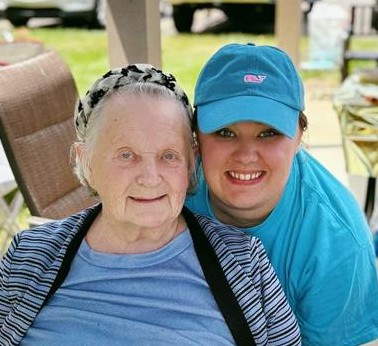
Over the course of my life, I have watched multiple loved ones walk through the slow and painful progression of dementia. Most intimately, I spent more than seven years helping care for my grandmother, whom we lovingly call Mum Mum. I have watched the disease gradually take pieces of her memory, her independence, and at times her ability to recognize many of the people around her. Yet through every stage of that loss, one thing has never disappeared: her inviolable dignity.
In a culture increasingly obsessed with productivity, autonomy, and efficiency, dementia can seem frightening because it strips away so many of the traits society wrongly uses to measure human worth. Dr. Camosy spoke about how many people begin to feel like burdens as they age or decline physically and mentally. They fear a loss of dignity, a diminished quality of life, or becoming dependent on others. But he reminded us of something profoundly Catholic and deeply human: we are finite, dependent, and social creatures. Dependency is not a failure of humanity; it is part of humanity itself.
The modern world often treats dependence as something shameful, but the Catholic understanding of the human person says the opposite. From the moment we enter the world until the moment we leave it, we need one another. An infant depends entirely on those around them for nourishment, protection, and love. The elderly often return to a similar vulnerability. Neither stage diminishes the sanctity of the person living it.
Dr. Camosy emphasized that flourishing happens in thick, embodied relationships—relationships rooted not in usefulness, but in presence, sacrifice, and love. That truth became especially real to me while caring for Mum Mum. Although she now lives in a memory care home, our relationship has not become less meaningful—it has simply become a different invitation to love with patience, presence, and grace.
At one point, someone asked me why I still visit my grandmother every day (when I am not traveling) even though she no longer remembers who I am most days. The question itself revealed something heartbreaking about our culture: the assumption that relationships only matter when there is recognition, reciprocity, or measurable return. My answer came instinctively. “Even if she can’t remember who I am, I still know who she is.”
She is still someone I love deeply. She is still someone who loves me, even if she cannot fully express it anymore. And even at the bare minimum, she is still a human being who deserves companionship, tenderness, and care. We are made to give love and to receive love. I can still see it in her smile, her laugh, and her eyes. Even during moments of confusion, there remains a quiet recognition—not always of my name or role, but of love itself. Mum Mum feels seen. She feels safe. She feels accompanied. That matters.
So much of our society speaks about dementia only in terms of loss. But we as Catholics are called to see beyond what is being lost and instead recognize what remains. The image of God does not disappear when memory fades. Human dignity is not contingent upon cognition, productivity, or independence. A person with Alzheimer’s is still a daughter, a son, a spouse, a parent, a friend, a beloved child of God! The tragedy is not that someone with dementia requires care. The tragedy is when society decides they are no longer worth our solicitude and care.
Dr. Camosy referenced the devastating loneliness many elderly people experienced during the pandemic—the countless deaths that occurred in isolation, particularly among the elderly in nursing homes and memory care facilities (Lydia Dugdale, MD, COVID 19: Lonely Dying and Dying Alone (April 5, 2021), available at COVID-19: Lonely Dying and Dying Alone | Psychology Today). It revealed what Pope Francis has repeatedly called a “throwaway culture,” where the vulnerable become invisible because they no longer contribute in ways society values (Pope Francis, Laudato Si, Encyclical letter, available at Laudato si' (24 May 2015).
But the Catholic response must be radically different. Care for the suffering is not merely a medical obligation or social courtesy. It is a corporal and spiritual work of mercy. It is embodied, sacrificial, and reflective of Christ Himself. Every visit, every difficult conversation repeated for the tenth time, every hand held during confusion or fear becomes an act of witness to the Gospel. In these moments, we proclaim that a human life never loses meaning.
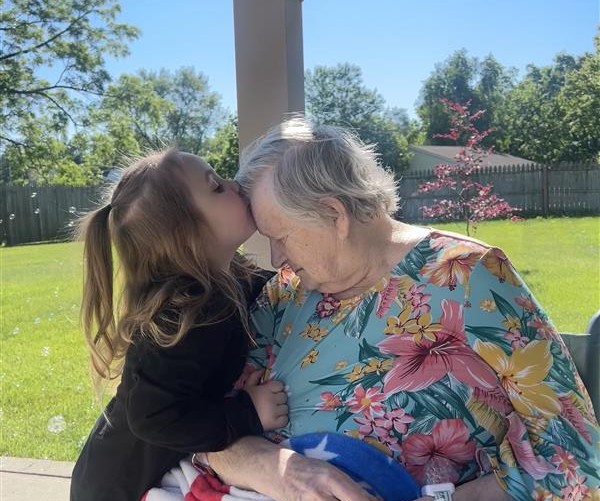
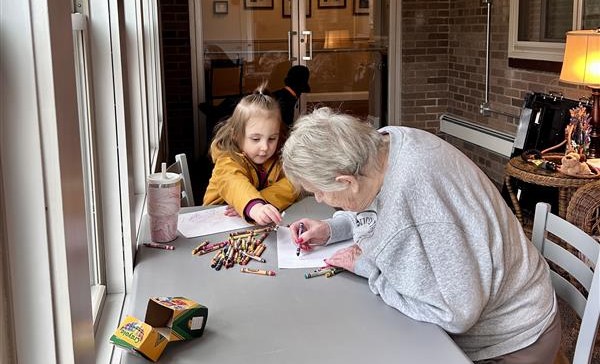
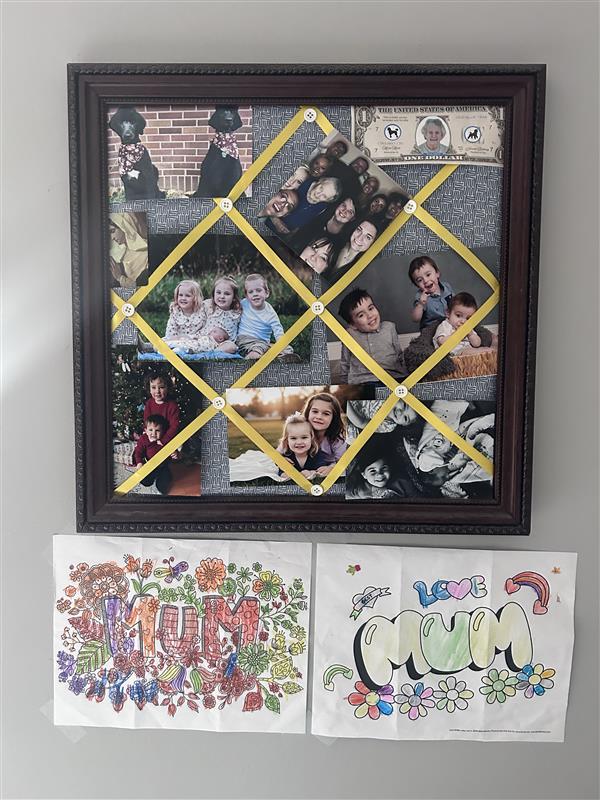
One of the most beautiful examples of this truth came through the relationship between my grandmother and her great-granddaughter, Olivia, who is also my goddaughter. For years, while Mum Mum and I lived together - Olivia, her parents, Mum Mum, and I spent time together nearly every week and we adults watched something extraordinary unfold between them. Olivia never saw Mum Mum as “less than.” She never measured her worth by memory or ability. In the uncomplicated and honest heart of a child, her only thought was simply: “I love Mum Mum.” And she still does.
Even now, months after Mum Mum moved into a wonderful memory care home, 4 year old Olivia continues visiting her weekly, often spending mornings with her simply because she wants to. Their relationship did not end when circumstances changed. Love adapted. It deepened in quieter, gentler ways. There is something profoundly theological in the way children often see the elderly and vulnerable more clearly than adults do. Children recognize people not for what they produce, but for who they are. In Olivia’s eyes, Mum Mum is still the same person she has always loved, and who has always loved her. That is how all of us should view human life.
In many ways, that kind of love reflects the heart of the Catholic understanding of human dignity. To love someone simply because they are human—not because they are productive, independent, healthy, or even fully aware—is to mirror the way Christ loves us. It challenges the fear-driven mindset of a culture that often equates suffering, aging, or dependency with a diminished quality of life. The elderly, the sick, and those living with dementia are not reminders of lives that have lost meaning; they are reminders that human worth was never meant to be measured by ability in the first place. They also gently confront us with the reality that every human life is finite.
Aging, illness, and eventually death are not failures of the human experience, but part of our sacred journey. In witnessing the vulnerability of those we love, we are reminded not only of their mortality, but of our own. And rather than making life seem smaller, that truth should move us to love more deeply while we still can. They call us back to something deeper: the understanding that every stage of life, even the most fragile, still holds purpose, beauty, and the presence of God.
As Catholics, we are called to live with momento mori—the remembrance that death is inevitable and earthly life is not our final destination. Dr. Camosy spoke about living and dying well, about understanding that this world is a gift but not the end of the story. Our hope is ultimately rooted in eternal life with Christ. Yet, remembering death should never make us value earthly life less. If anything, it should make us cherish it more tenderly.
To accompany someone through dementia is to stand at the uncomfortable intersection of mortality and love. It is painful and exhausting. It can feel unbearably slow and heartbreaking. But it can also be holy.
People often praise me for caring for Mum Mum all those years. They tell me I sacrificed so much, or say things like, “Bless you for doing that.” While I understand those comments come from kindness, I often find myself feeling sad when I hear them—not because caregiving is easy, but because loving our elders should not seem extraordinary.
It is a privilege to help preserve her dignity. A privilege to continue making her life as full of joy, warmth, and familiarity as possible. A privilege to witness moments of tenderness and humanity that many people never slow down enough to see. I was profoundly blessed by the support surrounding me: family members who showed up constantly - never allowing the weight of caregiving to fall on one person alone, but carrying it together with love, patience, and sacrifice. In so many ways, they reminded me that caring for someone with dementia is not meant to be done in isolation. It becomes an act of family, of community, of shared love.
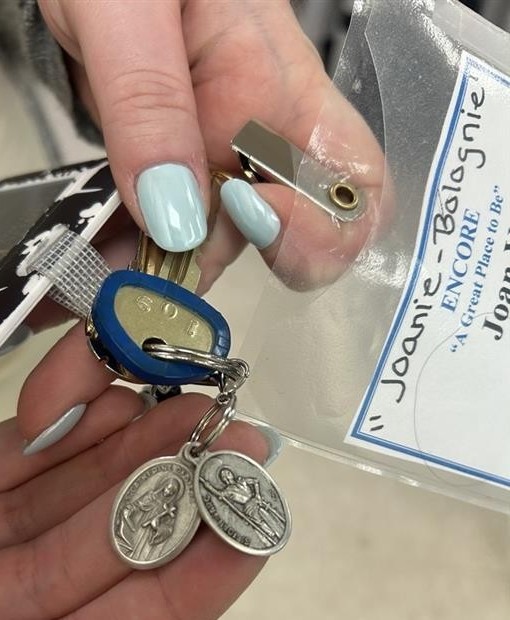
I was also blessed with coworkers at Christ Medicus who love Mum Mum like their own family, a workplace that allowed flexibility for caregiving, and organizations like Catholic Charities of Southeast Michigan and their Encore program, which helped Mum Mum remain at home longer while receiving compassionate care and community during the day. Programs like them do more than provide services. They give families time—time together, time to breathe, time to continue loving well through the challenges of dementia.
In a world that often treats aging and dependency as burdens, that kind of support becomes a quiet witness to the dignity of human life. It reminds us that caregiving is not simply about meeting physical needs, but about accompanying someone with love through every stage of life. Dementia may change the way a person communicates, remembers, or functions, but it does not erase their need for tenderness, patience, laughter, familiarity, or belonging. In many ways, caring for our elders becomes a reflection of the very love once poured into us when we were vulnerable and dependent ourselves.
Our parents and grandparents once clothed us, fed us, comforted us, cleaned up after us, taught us right from wrong, and loved us patiently when we were completely dependent on them. When age reverses those roles, caregiving becomes not merely obligation, but an opportunity to return love through sacrifice. Of course, not every family has the same resources or circumstances. Some people carry these burdens alone. Others face financial hardship, broken relationships, or impossible logistical realities. There is no single perfect solution for caring for loved ones with dementia. But God does not ask perfection from us. He asks faithfulness.
Sometimes faithfulness looks like full-time caregiving. At other times, it looks like choosing a quality care facility. Sometimes it looks like making a phone call, showing up for a visit, or sitting quietly beside someone who may no longer remember your name. Those moments still matter.
The world may see little value in them because they cannot be quantified. But the Kingdom of God operates differently. The Gospel reminds us of the widow who offered only a few small coins at the temple. Christ recognized the greatness of her offering not because of its size, but because she gave all she could (Luke 21:1-4).
The same is true for caregiving. No act of love offered with sincerity is wasted. And so while memories may fade, names may become harder to recall, and words may sometimes disappear entirely, the truth remains unchanged: This person is still worthy of love. This person is still worthy of presence. This person is still worthy of life and love until the very last breath.